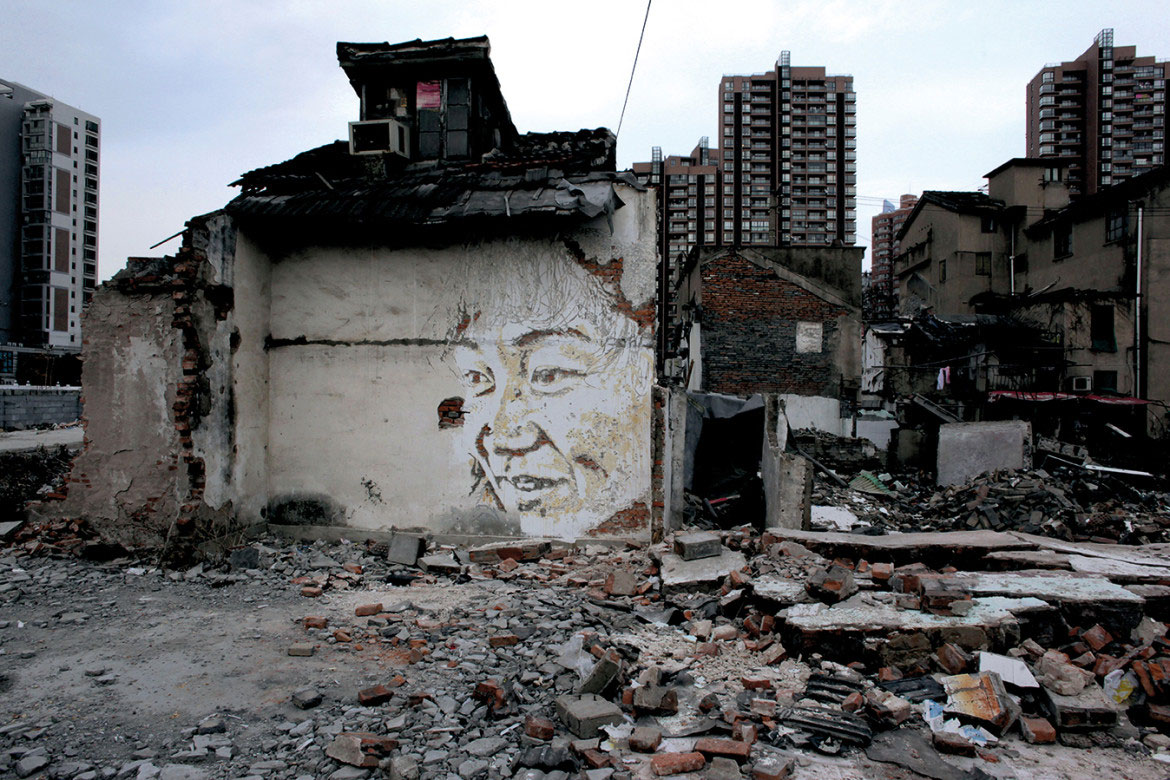
Whether the street works seem utopian or anarchic, aggressive or sympathetic, stunningly well-executed or juvenile, original or derivative, most street artists seriously working in the genre begin with a deep identification and empathy with the city: they are compelled to state something in and with the city, whether as forms of protest, critique, irony, humor, beauty, subversion, clever prank or all of the above. The pieces can be ephemeral, gratuitous acts of beauty or forms of counter-iconography, inhabiting spaces of abandonment and decay, or signal jams in a zone of hyper-commercial messaging.
A well-placed street piece will reveal the meaning of its material context, making the invisible visible again, a city re-imaged and re-imagined. A street work can be an intervention, a collaboration, a commentary, a dialogic critique, an individual or collective manifesto, an assertion of existence, aesthetic therapy for the dysaesthetics of urban controlled, commercialized visibility, and a Whitmanian hymn with the raw energy of pent-up democratic desires for expression and self-assertion. Whatever the medium and motives of the work, the city is the assumed interlocutor, framework, and essential precondition for making the artwork work.
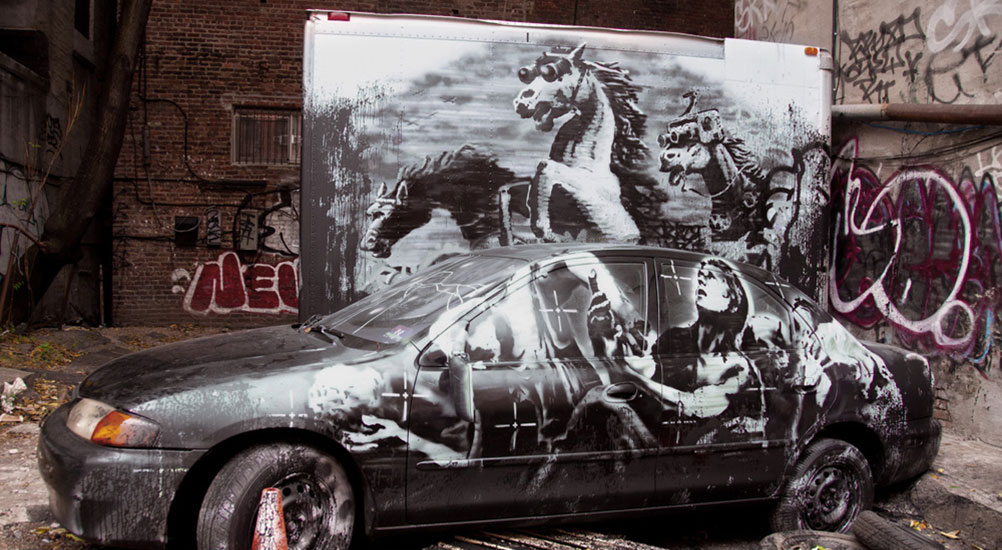
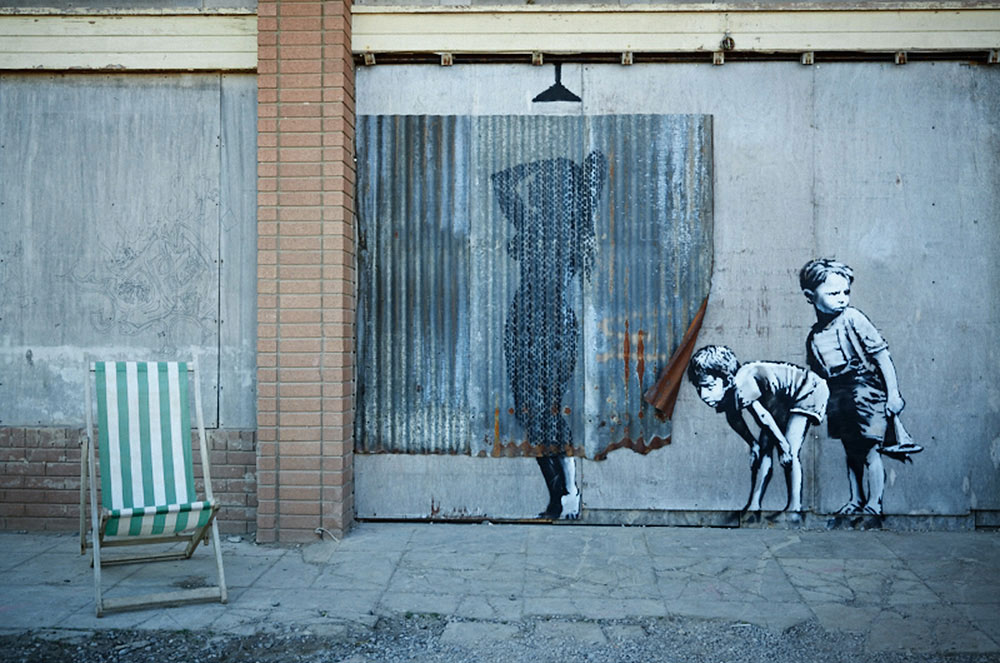
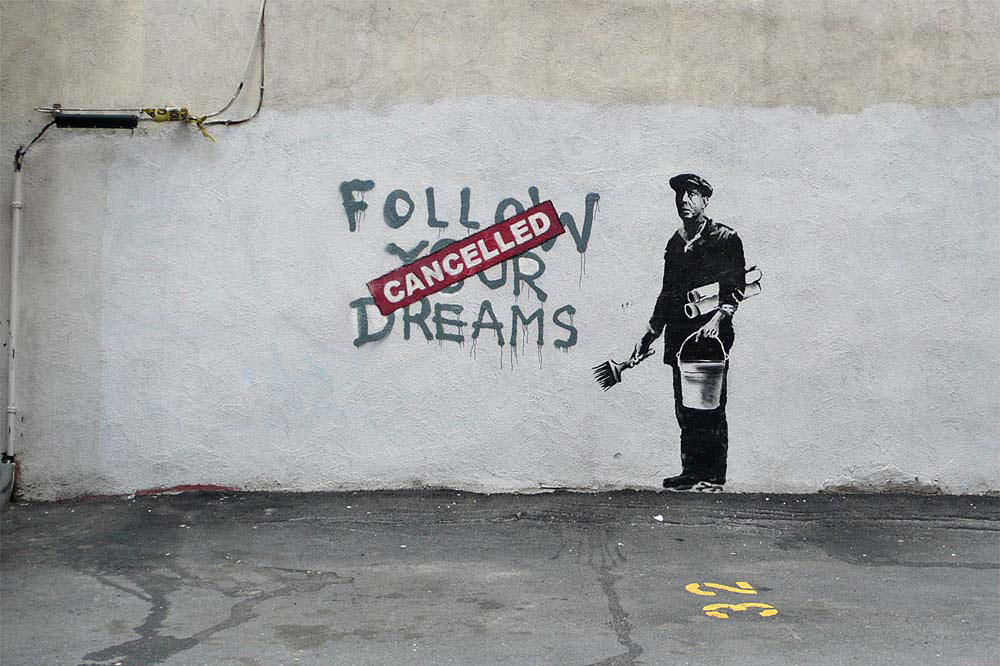
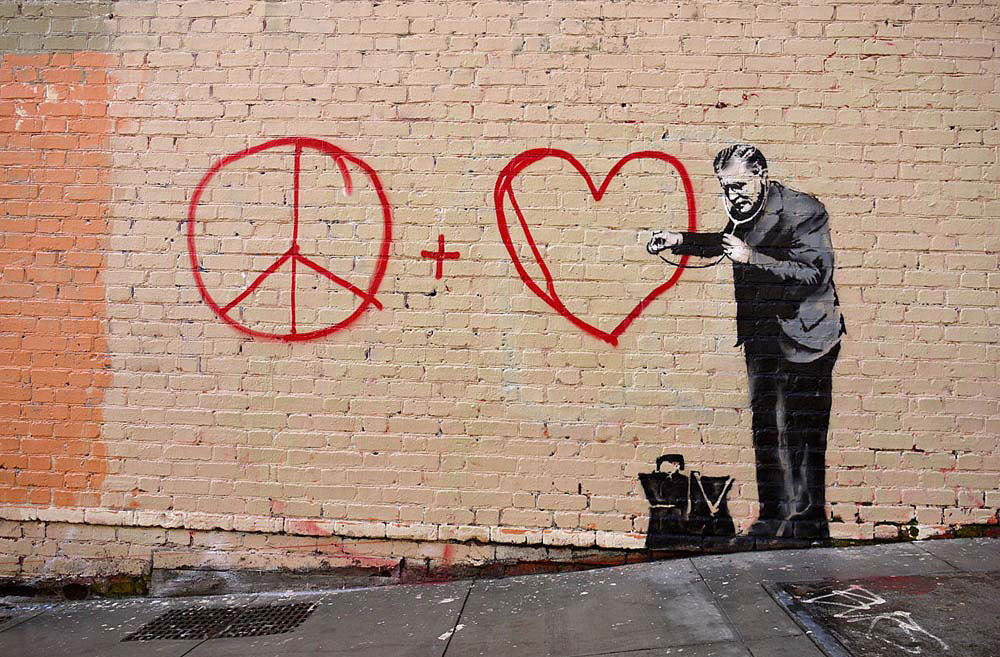
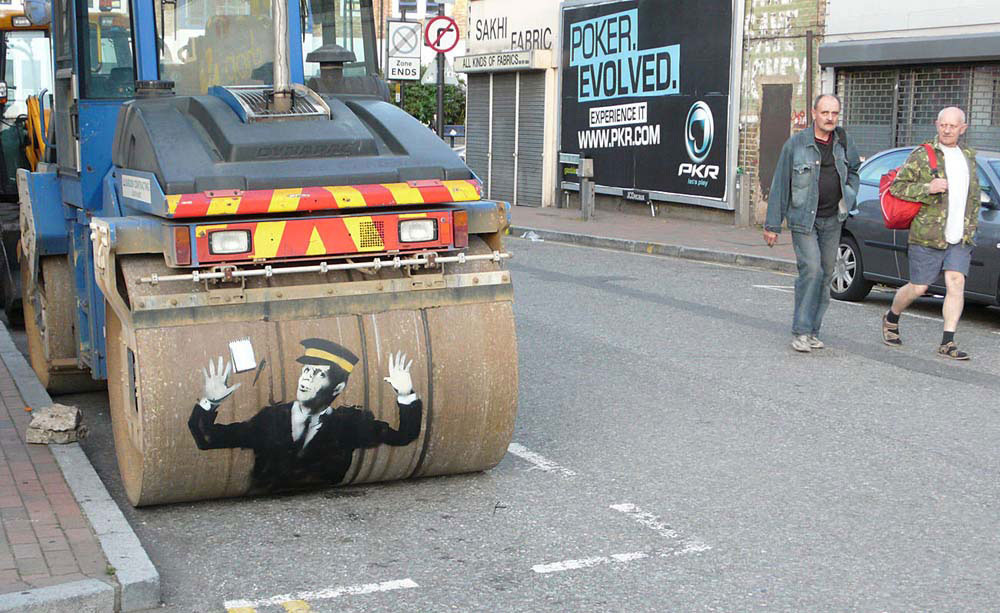
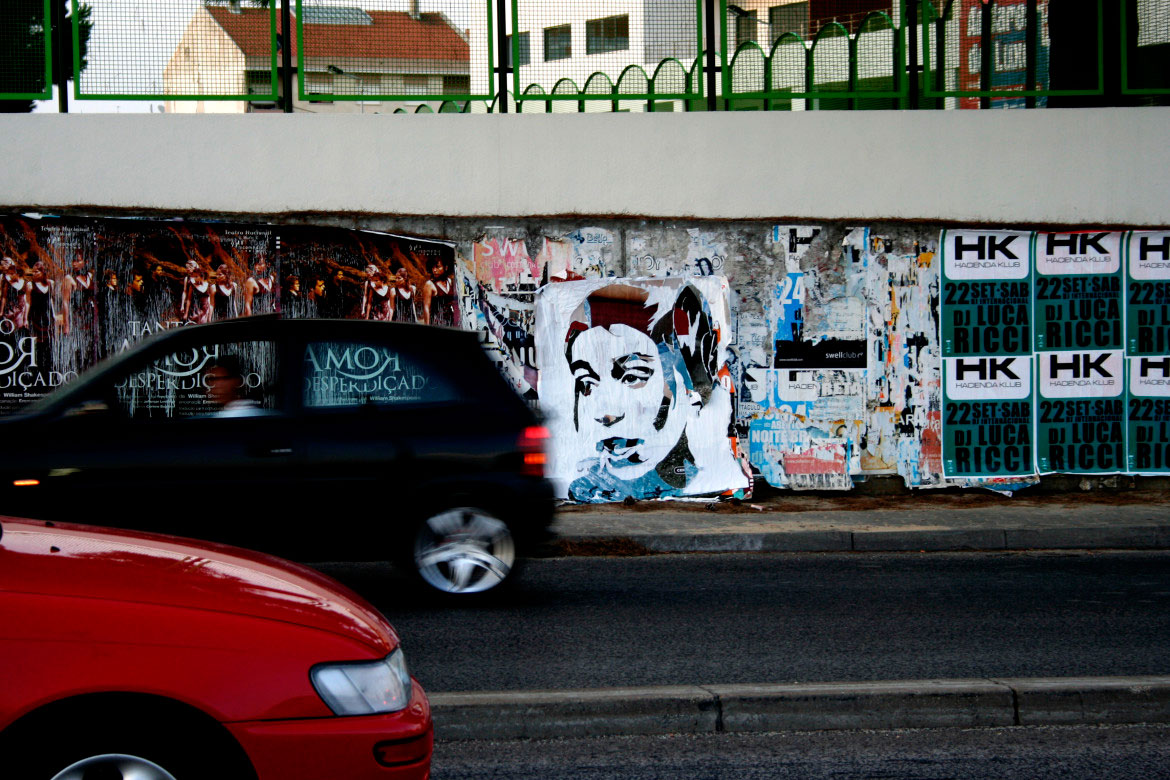
Began his street art career in the 90’s with freehand pieces, but evenetually switched to using stencils. In his work banksy has used a variety of different characters, which have included: rats, apes, policemen, members of the royal family, and children. Banksy’s art materfully combines dark humor with graffiti, which gives rise to controversy sorounding the work he does. His work has shown up around the world in places like Australia, England, the United States, Israel, Jamaica, and Canada.
“People say graffiti is ugly, irresponsible and childish... but that's only if it's done properly.”
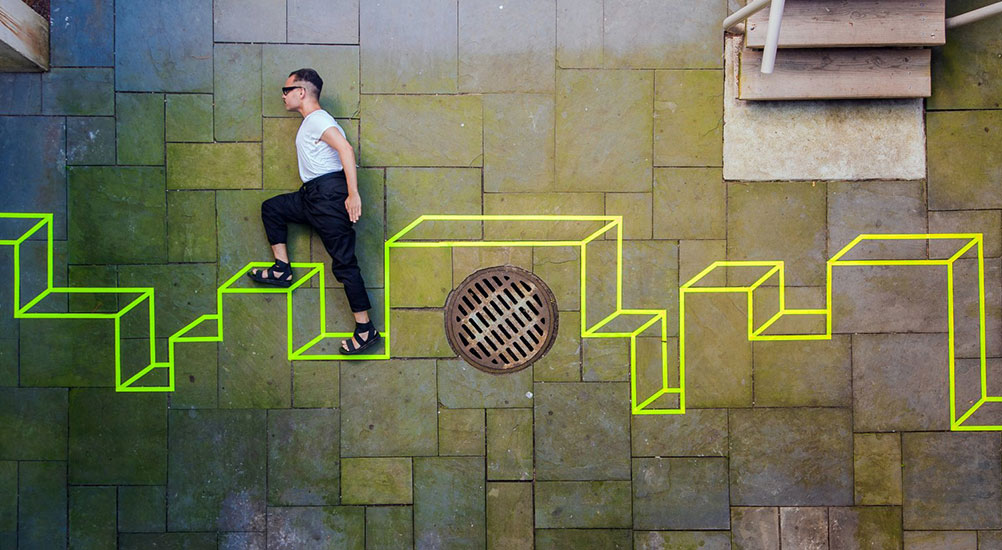
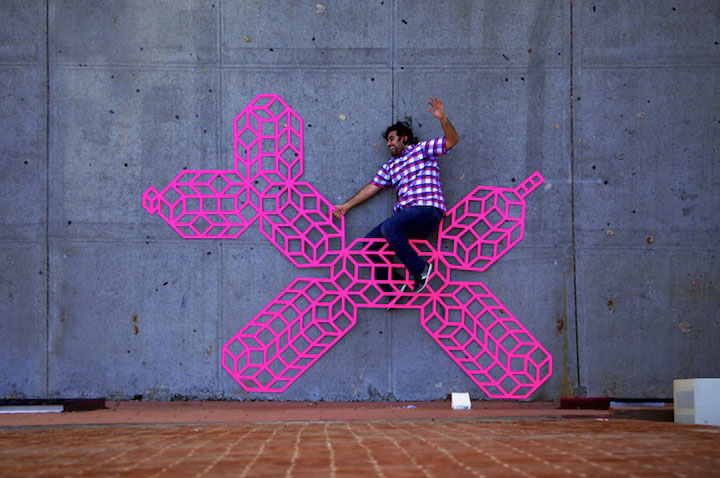
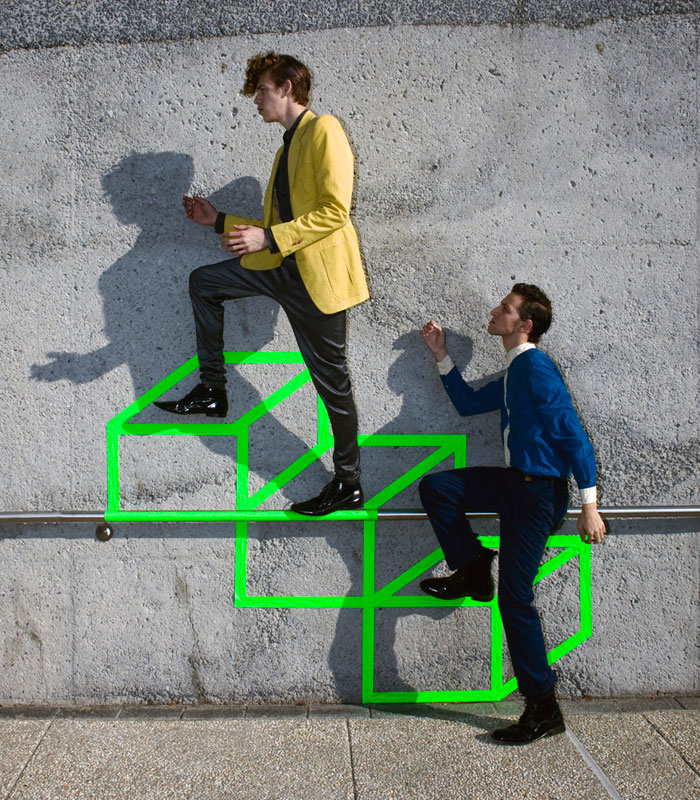
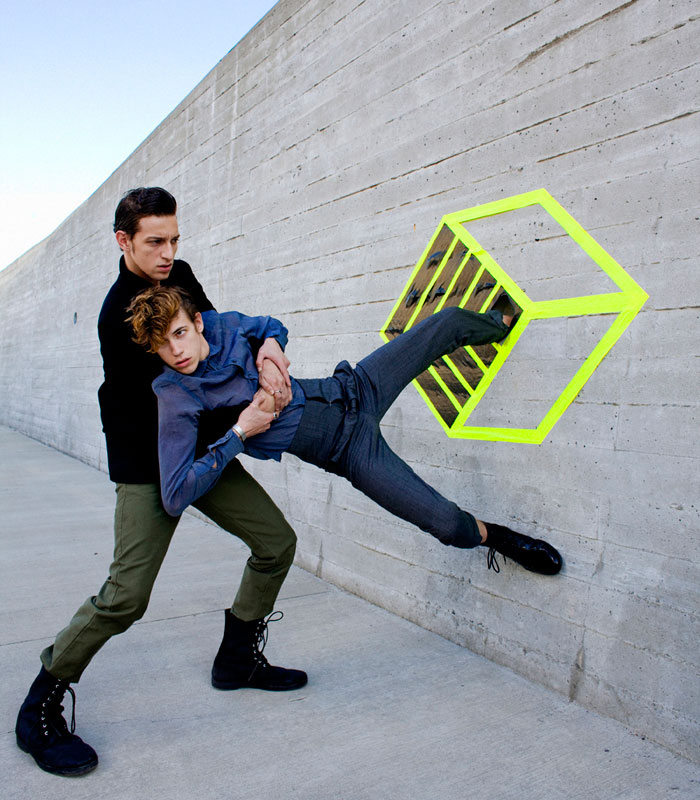
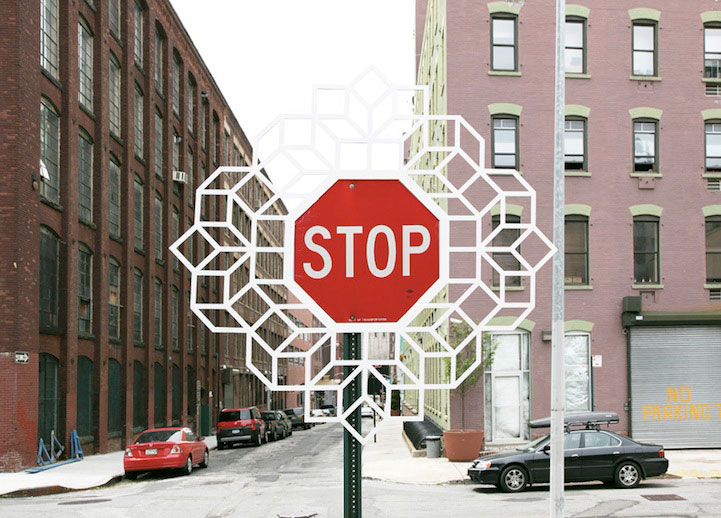
Makes great use of respitition in the work that he does. He uses a lot of isometric squares and triangles with bold bright lines in order to try and create 3-D images on a 2-D surface. Nihalani seeks to give the viewer a break from their daily reality, by providing the viewer with a momentary opportunity to live more playfully within the new space he has created.
“My work is created in reaction to what we readily encounter in our lives…I’m just connecting the dots differently to make my own picture. Others need to see that they can create too, connecting their own dots, in their own places.”
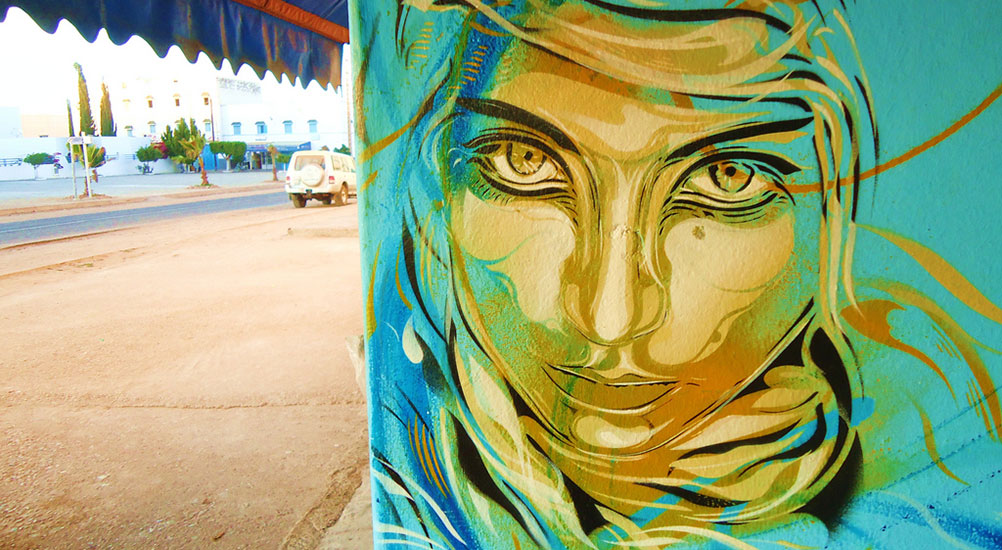
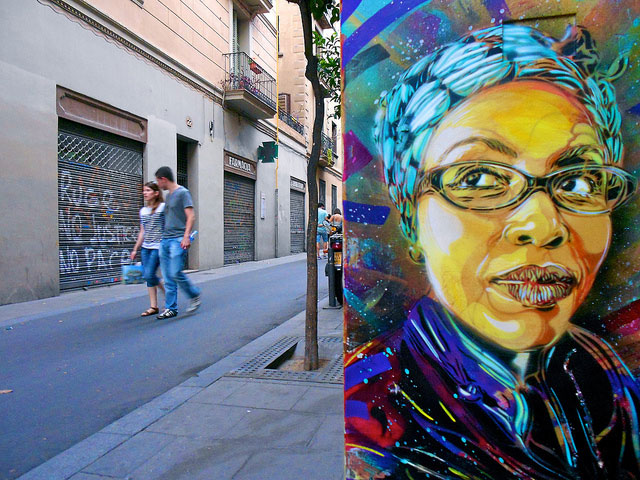
Has been practicing street art for over 20 years. He uses stencils enhanced through the use of graffiti markers. His work focuses on making portrats for people or groups who are often forgot or are considered unimportant, like begger children, elders, and refugees in order to prevent them from being left behind by society.
“Street art is nothing else but urban poetry that catches someone’s eye. Being a street artist is impossible, because the city itself is the artist.”
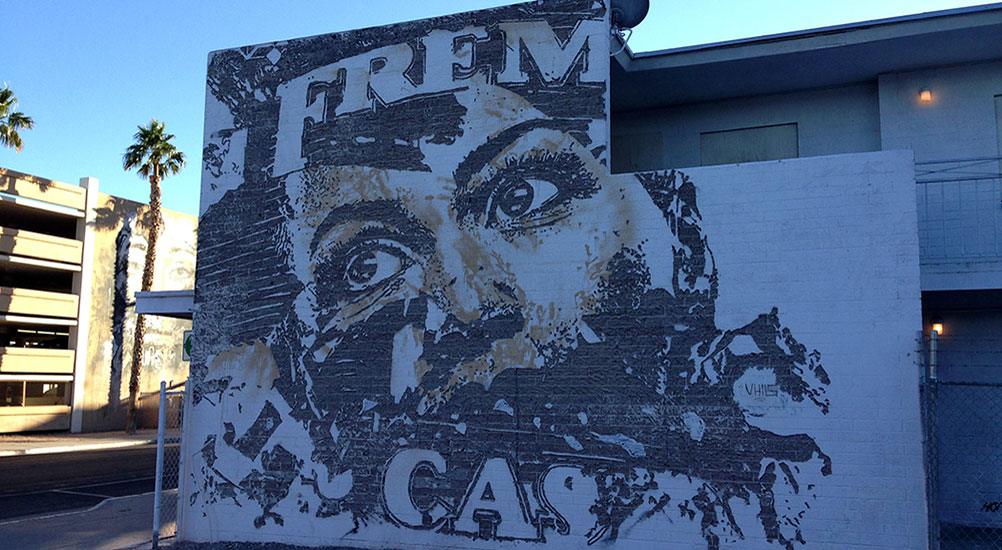
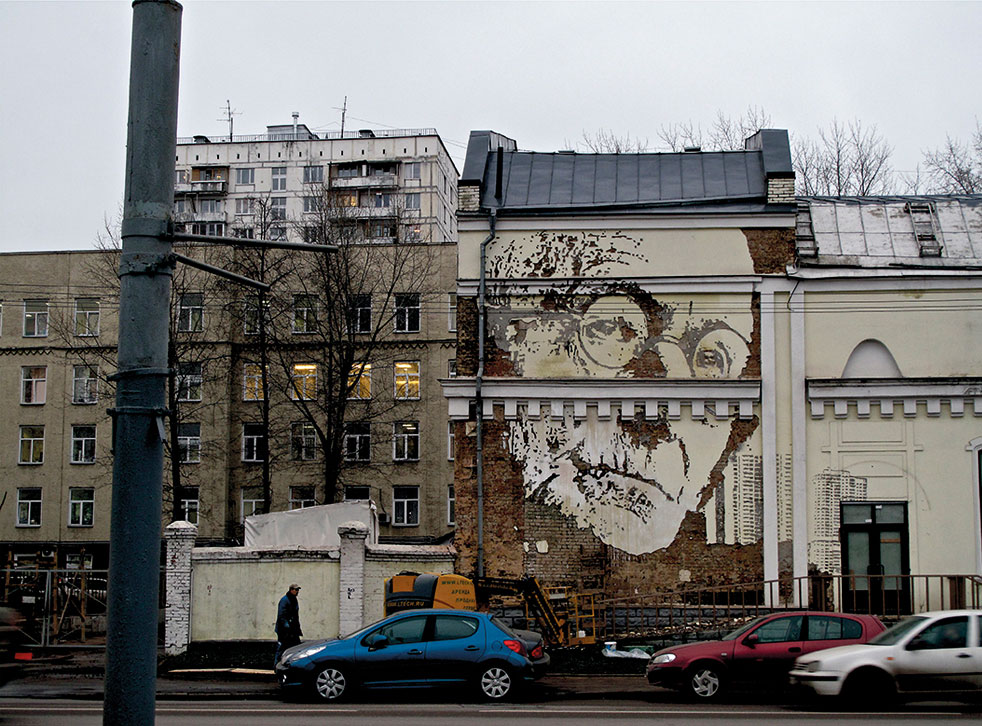
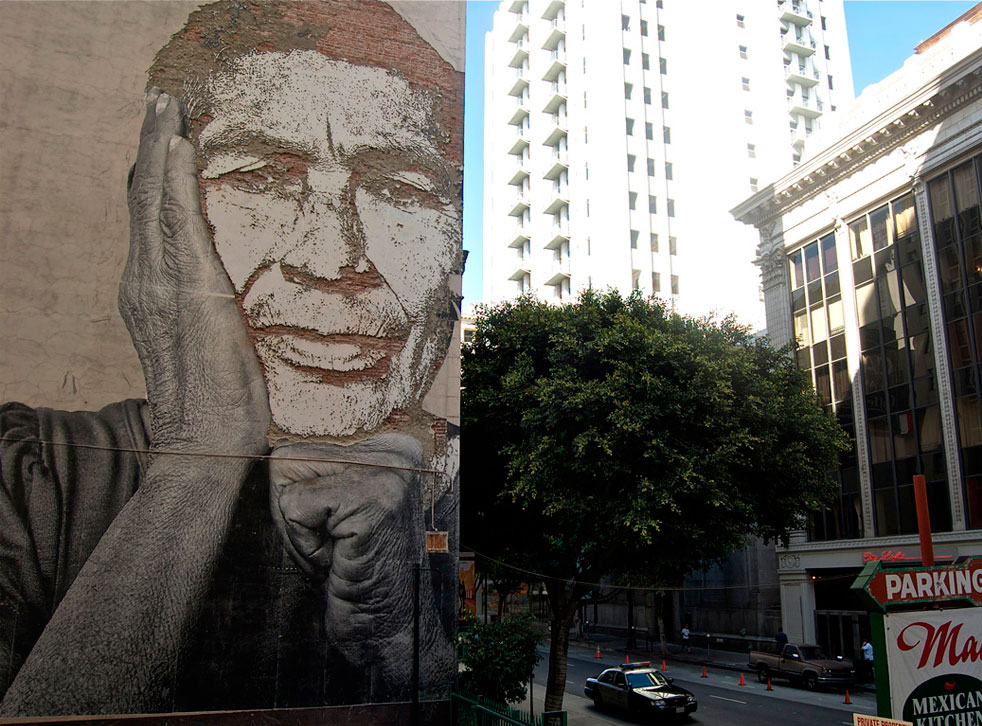
Believes that everyone is made up of different layers of historial and social fabric, and he seeks to portray this idea in the street art he creates. He uses a variety of different tools, like chisels, acids, bleach, and drills, in order to remove the layers of the surface he is working on. His work normally uses three different colros to help provide for depth, and results in turning normal individual into icons.
“With my work, I try to delve into the several layers that compose the edifice of history, to take the shadow cast by this model of uniform development to try and understand what lies behind it.”